

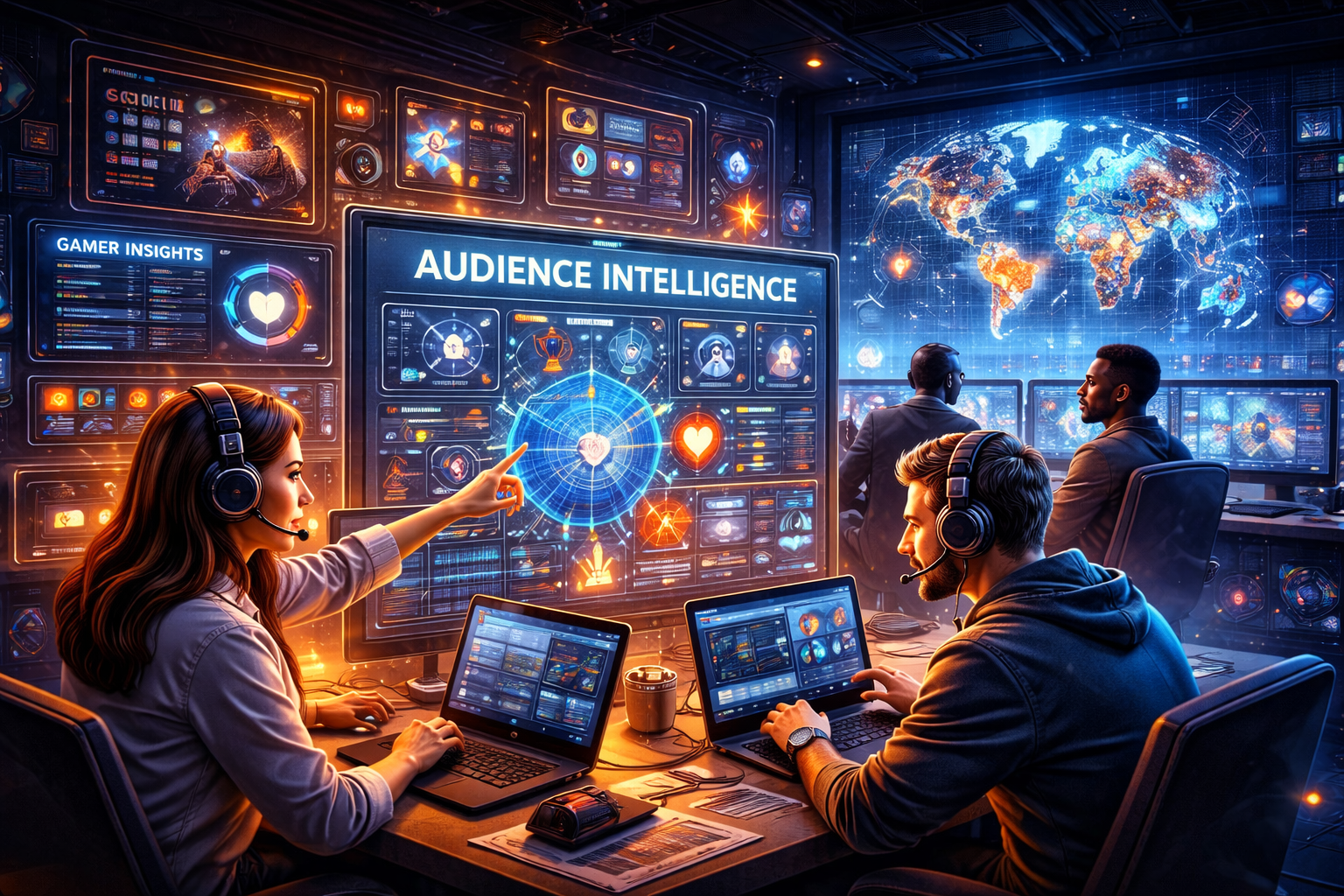
Gaming is no longer a niche channel. It is a complex ecosystem shaped by player behavior, platform dynamics, creator influence, and community culture. Brands entering this space cannot rely on broad demographics or assumptions. They need precision. This is where audience intelligence becomes critical within gaming strategy services.
Audience intelligence is not just about knowing who plays games. It is about understanding how, why, and where they engage. It connects player data, content consumption patterns, and community signals to guide strategic decisions. Without it, even well-funded campaigns fail to resonate.
What Audience Intelligence Means in Gaming
Audience intelligence in gaming refers to the structured use of data to understand player segments, behaviors, motivations, and engagement patterns across platforms. It goes beyond age and gender. It includes:
- Game genre preferences such as FPS, battle royale, MOBA, or sports simulation
- Platform usage across PC, console, and mobile
- Session frequency and playtime behavior
- Content consumption on streaming platforms
- Creator affinity and influencer trust signals
- In-game spending habits and monetization behavior
- Community participation across Discord, Reddit, and live chat
Gaming audiences are not passive. They are active participants in ecosystems. They create content, influence peers, and shape trends. Audience intelligence captures these layers and turns them into actionable inputs for gaming strategy services.
Why Audience Intelligence Is Critical in Gaming Strategy Services
Precision Targeting in Fragmented Ecosystems
Gaming audiences are highly fragmented. A mobile puzzle gamer in MENA behaves differently from a competitive PC esports player in Europe. Without audience intelligence, brands risk broad targeting that leads to low engagement.
Gaming strategy services use audience intelligence to identify micro-segments. These segments are defined by behavior, not just demographics. This allows campaigns to reach players in the right context, whether during gameplay, content consumption, or community interaction.
Aligning with Gaming Culture
Gaming culture is nuanced. Each community has its own language, humor, and expectations. A campaign that ignores this feels forced and is quickly rejected.
Audience intelligence helps decode these cultural layers. It identifies what resonates within specific gaming communities. It informs tone, creative direction, and messaging so that campaigns feel native instead of intrusive.
Improving Engagement Metrics
Engagement in gaming is not measured only by impressions or clicks. It includes:
- Watch time on live streams
- Chat interaction during broadcasts
- Community participation rates
- Content shares within gaming circles
- Retention across campaign touchpoints
Audience intelligence identifies what drives these actions. Gaming strategy services use these insights to optimize campaigns for deeper engagement rather than surface-level visibility.
Driving Measurable ROI
Brands investing in gaming expect clear returns. Audience intelligence connects campaign activity to outcomes such as:
- Conversion rates from gaming audiences
- Cost per engaged user
- Lifetime value of acquired players or customers
- Brand lift within specific gaming segments
Gaming strategy services rely on these metrics to refine targeting, allocate budgets, and improve performance over time.
Key Components of Audience Intelligence in Gaming
Behavioral Data
Behavioral data tracks how players interact with games and content. It includes session length, frequency, and in-game actions. This data reveals engagement depth and helps identify high-value segments.
Platform Insights
Different platforms serve different roles in the gaming ecosystem. Twitch and YouTube Gaming drive content discovery. Discord builds community. In-game environments drive immersion.
Audience intelligence maps where users spend time and how they transition between platforms. Gaming strategy services use this to design cross-platform campaigns.
Creator and Influencer Affinity
Influencers play a central role in gaming. Players trust creators who share their interests and play styles.
Audience intelligence identifies which creators influence specific segments. It analyzes engagement rates, audience overlap, and content relevance. This ensures influencer collaborations deliver real impact.
Community Signals
Gaming communities are highly vocal. They provide real-time feedback on trends, updates, and brand activity.
Audience intelligence captures sentiment from forums, chats, and social platforms. This helps brands understand community perception and adapt quickly.
Purchase and Monetization Patterns
Understanding how gamers spend is essential for brands. Some players invest in skins and cosmetics. Others spend on hardware or subscriptions.
Audience intelligence reveals these patterns. Gaming strategy services use them to align product positioning and pricing strategies.
How Gaming Strategy Services Use Audience Intelligence
Segmenting Gaming Audiences
Segmentation is the foundation of any strategy. Gaming strategy solution divide audiences into groups based on behavior, preferences, and engagement patterns.
Examples include:
- Competitive esports players
- Casual mobile gamers
- Content-first viewers who rarely play
- High-spending players in specific genres
Each segment requires a different approach. Audience intelligence ensures these segments are clearly defined and actionable.
Crafting Data-Led Campaign Strategies
Campaigns built on assumptions fail. Campaigns built on data perform.
Audience intelligence informs:
- Campaign objectives aligned with player behavior
- Platform selection based on usage patterns
- Timing based on peak activity periods
- Content formats that match consumption habits
Gaming strategy services use these inputs to design campaigns that fit naturally into the gaming experience.
Optimizing Creative Execution
Creative strategy in gaming is not just about visuals. It is about relevance.
Audience intelligence guides:
- Tone and messaging aligned with community culture
- Content formats such as live streams, short-form clips, or in-game integrations
- Visual styles that match game aesthetics
This reduces friction and increases acceptance within gaming communities.
Enhancing Influencer Collaborations
Not all influencers deliver value. Audience intelligence helps identify creators who align with campaign goals.
Gaming strategy services evaluate:
- Audience overlap between brand and creator
- Engagement quality, not just follower count
- Content relevance within specific game genres
This ensures influencer campaigns drive meaningful engagement.
Continuous Performance Optimization
Gaming campaigns are dynamic. Player behavior changes quickly.
Audience intelligence enables real-time optimization by tracking:
- Engagement trends
- Audience response to content
- Platform performance
Gaming strategy services use this data to adjust campaigns and improve results continuously.
Challenges Without Audience Intelligence
Brands that ignore audience intelligence face several issues:
- Misaligned messaging that feels out of place
- Poor engagement due to incorrect targeting
- Wasted budget on ineffective platforms
- Negative sentiment within gaming communities
- Limited ROI despite high spend
Gaming is not forgiving. Communities quickly identify inauthentic efforts. Audience intelligence reduces these risks.
The Competitive Advantage of Audience Intelligence
Brands that invest in audience intelligence gain a clear advantage:
- Faster market entry with informed strategies
- Higher engagement through relevant content
- Stronger community connections
- Better conversion rates
- Long-term brand equity within gaming ecosystems
Gaming strategy services that prioritize audience intelligence position brands for sustained success rather than short-term visibility.
The Role of Technology in Audience Intelligence
Advanced tools play a key role in collecting and analyzing data. These include:
- Analytics platforms tracking gameplay and engagement
- Social listening tools monitoring community sentiment
- AI-driven clustering for audience segmentation
- Attribution models connecting campaigns to outcomes
Technology enhances accuracy, but strategy remains essential. Gaming strategy services combine tools with expertise to interpret data correctly.
Power League Gaming and Audience Intelligence
Power League Gaming applies audience intelligence at the core of its gaming strategy services, with a strong focus on the MENA gaming ecosystem. The approach centers on translating player behavior, creator ecosystems, and platform dynamics into actionable strategies tailored to regional audiences. By combining data insights with content production, influencer collaborations, and community management, PLG builds campaigns that align with how gamers actually engage across MENA. This ensures that brands do not just enter the gaming space but integrate into the ecosystem with measurable impact.
Conclusion
Audience intelligence is not optional in gaming. It is the foundation of effective gaming strategy services. It provides clarity in a complex ecosystem where player behavior, community culture, and platform dynamics constantly evolve.
Brands that rely on assumptions struggle to connect. Brands that use audience intelligence build relevance, engagement, and long-term value. In gaming, understanding the audience is not just an advantage. It is the difference between being ignored and being accepted.
Frequently Asked Questions
1. What is audience intelligence in gaming strategy services?
Audience intelligence in gaming strategy services refers to the use of player data, behavioral insights, and community signals to understand how gaming audiences interact across platforms. It helps brands identify the right segments, platforms, and content strategies to drive engagement and conversions.
2. Why is audience intelligence important for gaming marketing campaigns?
Gaming audiences are highly segmented and community-driven. Audience intelligence ensures campaigns are aligned with player behavior, platform usage, and gaming culture. This improves engagement, reduces wasted spend, and increases ROI.
3. How do gaming strategy services use audience intelligence to improve campaign performance?
Gaming strategy services use audience intelligence to segment users, select relevant platforms, optimize creative formats, and choose the right influencers. It also supports real-time performance tracking, allowing campaigns to be refined based on engagement data.
4. What types of data are used in audience intelligence for gaming?
Audience intelligence relies on behavioral data such as gameplay patterns, content consumption habits, influencer engagement, community interactions, and in-game spending behavior. These data points help create accurate audience profiles.
5. How does audience intelligence help brands enter the gaming ecosystem effectively?
Audience intelligence enables brands to understand gaming culture, identify relevant communities, and create strategies that feel authentic. This helps brands integrate into the ecosystem rather than appear as external advertisers, leading to stronger engagement and long-term impact.